










The Power of CRM- How It Boosts Sales Lead Conversion
Posted on June 8, 2021 by Vikram Kotnis
Generating leads is only the first step toward business growth. The real challenge for sales teams is converting those leads into paying customers through timely communication, effective nurturing, and a structured sales process.
Many businesses lose potential opportunities because lead information is scattered across spreadsheets, emails, calls, and multiple tools. Without proper visibility into customer interactions, sales teams may miss follow-ups, prioritize the wrong prospects, or fail to understand where leads are dropping from the sales funnel.
This is where CRM software for lead conversion plays an important role.
A Customer Relationship Management (CRM) system helps businesses capture, organize, qualify, nurture, and track leads throughout the buyer journey. By bringing marketing and sales activities onto a single platform, CRM enables teams to make data-driven decisions, improve follow-up processes, and increase the chances of converting prospects into customers.
Modern sales CRM platforms like Kylas CRM help businesses streamline lead management, automate repetitive sales activities, and build a more predictable conversion process.
What Is Lead Conversion?
Lead conversion is the process of transforming a potential customer (lead) into a paying customer by guiding them through different stages of the buyer journey.
A typical sales funnel includes:
Lead → Marketing Qualified Lead (MQL) → Sales Qualified Lead (SQL) → Opportunity → Customer
At each stage, businesses need to understand customer requirements, provide relevant information, address objections, and maintain consistent communication.
A successful lead conversion strategy depends on:
- Understanding customer needs
- Responding quickly to enquiries
- Prioritizing high-intent prospects
- Maintaining regular follow-ups
- Tracking sales activities effectively
A CRM system helps businesses manage each of these activities systematically.
How to Calculate Lead Conversion Rate
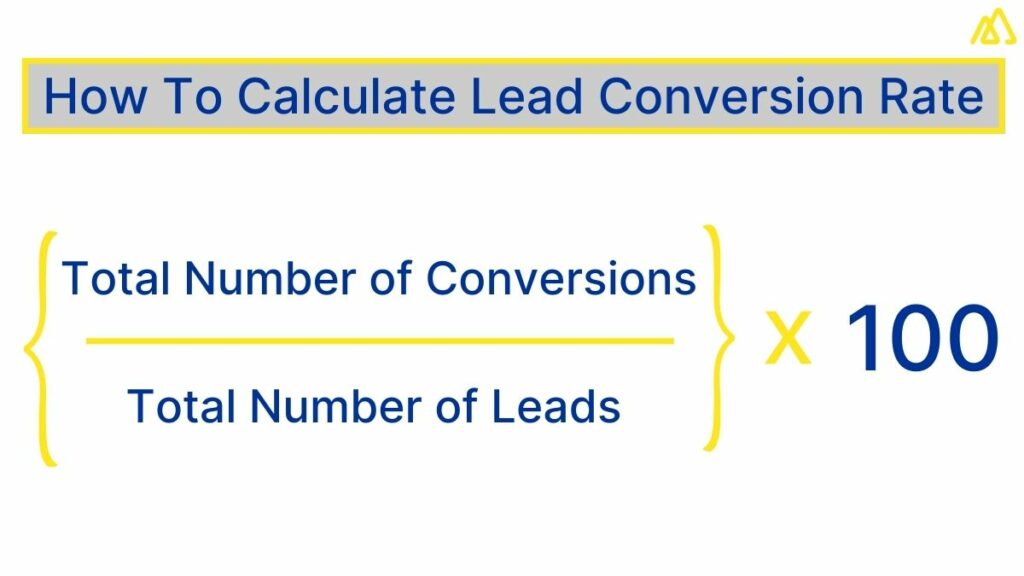
Lead conversion rate is a key sales metric that measures how effectively a business converts leads into customers.
Lead Conversion Rate Formula
Lead Conversion Rate = (Number of Converted Leads ÷ Total Number of Leads) × 100
Example:
If a business receives:
- 1,000 leads
- 50 customers generated from those leads
The conversion rate would be:
(50 ÷ 1,000) × 100 = 5%
Tracking conversion rate helps businesses:
- Identify sales process gaps
- Understand lead quality
- Measure marketing effectiveness
- Improve sales forecasting
- Allocate resources efficiently
A CRM makes this process easier by storing lead information, tracking customer interactions, and generating reports automatically.
Why Lead Conversion Is Challenging Without CRM
Businesses often struggle with lead conversion because of:
Missed Follow-Ups
When lead information is managed manually, sales representatives may forget follow-ups or delay responses.
A missed follow-up can result in losing a potential customer to a competitor.
Lack of Lead Visibility
Without a centralized system, sales teams may not know:
- Which leads are active
- Which prospects require attention
- Which deals are close to conversion
Poor Lead Prioritization
Not every lead has the same buying intent.
Sales teams need to identify:
- High-value prospects
- Ready-to-buy customers
- Leads requiring further nurturing
CRM software helps prioritize leads based on customer data and engagement behaviour.
How CRM Creates a Better Lead Conversion Process
A successful lead conversion strategy requires a structured approach.
A CRM helps businesses create a streamlined workflow:
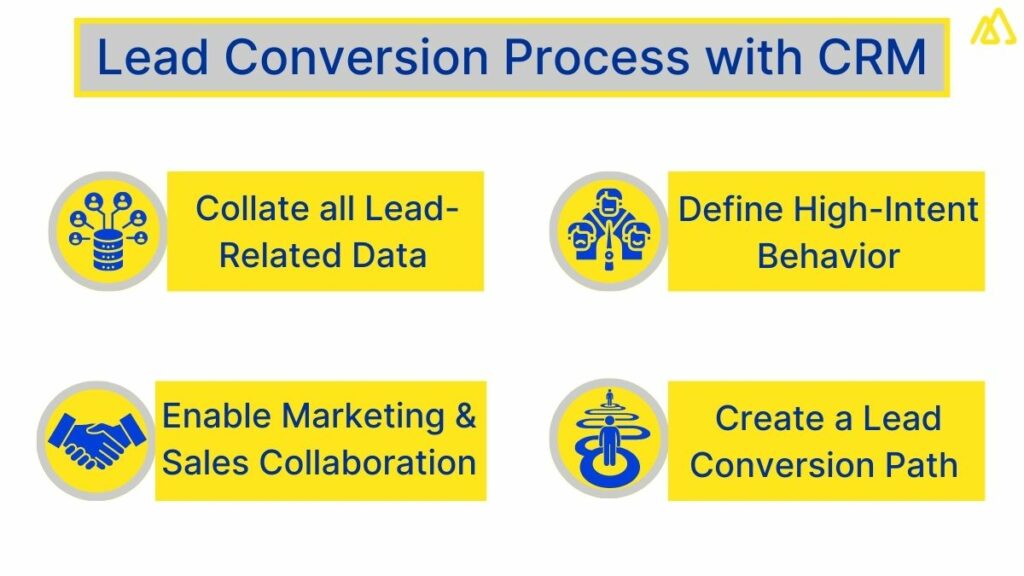
Capture and Organize Lead Data
The first step in conversion is collecting complete information about potential customers.
CRM software automatically captures and organizes details such as:
- Lead source
- Contact information
- Industry
- Customer requirements
- Previous interactions
- Sales activity history
This gives sales teams complete context before engaging with prospects.
Identify High-Intent Leads
Not every lead needs immediate sales attention.
CRM systems help teams identify high-intent prospects based on:
- Engagement level
- Buying timeline
- Customer requirements
- Previous interactions
- Deal probability
Align Marketing and Sales Teams
Marketing teams generate leads, while sales teams convert them into customers.
A CRM creates better collaboration by allowing teams to:
- Share lead information
- Track customer journeys
- Monitor campaign performance
- Understand sales feedback
This alignment improves the overall lead management process.
Create a Clear Conversion Path
A defined sales journey helps prospects move smoothly toward purchase.
A CRM allows businesses to create stages such as:
| Sales Stage | Purpose |
|---|---|
| New Lead | Capture incoming enquiries |
| Qualification | Understand customer requirements |
| Demo/Discussion | Present solution |
| Proposal | Share pricing and terms |
| Negotiation | Resolve objections |
| Closed Won | Customer conversion |
This structured approach reduces confusion and improves sales efficiency.
How CRM Software Improves Sales Lead Conversion
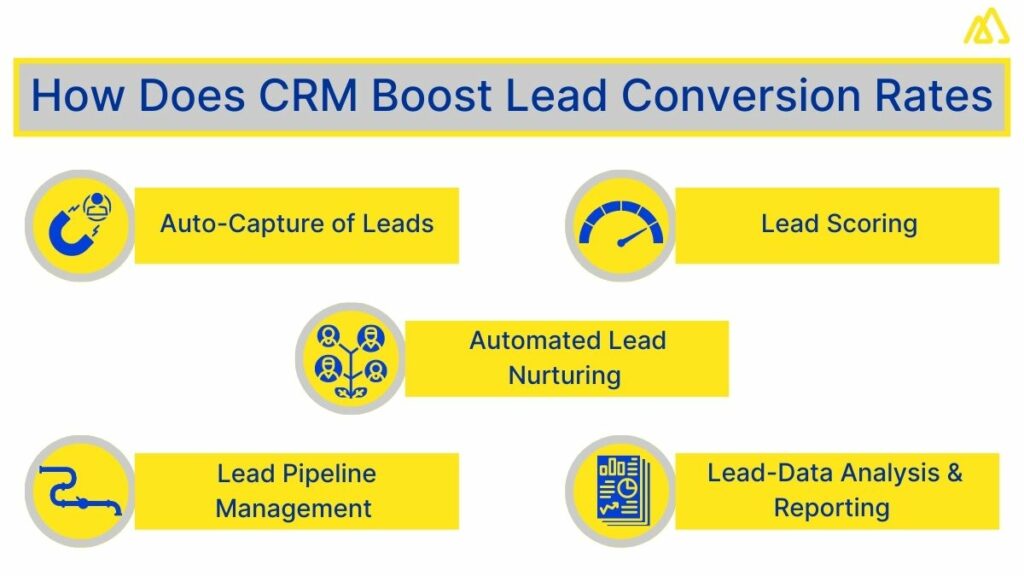
CRM platforms improve conversion rates by simplifying lead management and improving sales execution.
Automatic Lead Capture
Every enquiry represents a potential sales opportunity.
CRM software can capture leads from multiple sources, including:
- Website forms
- Marketing campaigns
- Emails
- Social platforms
- Sales enquiries
This reduces manual data entry and ensures that potential opportunities are not missed.
Lead Scoring and Qualification
Lead scoring helps sales teams identify which prospects deserve immediate attention.
CRM systems can evaluate leads based on:
- Requirement
- Budget
- Purchase timeline
- Engagement history
- Interaction level
This allows sales teams to prioritize leads more effectively.
Automated Lead Nurturing
Consistent communication is essential for converting leads.
CRM automation helps businesses:
- Schedule follow-up reminders
- Send personalized messages
- Create automated workflows
- Maintain regular engagement
This ensures prospects receive the right communication at the right stage.
Sales Pipeline Management
A sales pipeline provides visibility into every active opportunity.
CRM pipeline management helps teams track:
- Current deal stage
- Expected revenue
- Pending actions
- Sales bottlenecks
Sales managers can identify problems early and improve decision-making.
Data-Based Reporting and Analytics
Improving conversion requires understanding current performance.
CRM reporting provides insights into:
- Lead sources
- Conversion rates
- Sales performance
- Revenue forecasts
- Team productivity
These insights help businesses optimize their sales strategies.
CRM vs Manual Lead Management
| Feature | With CRM | Without CRM |
| Data Security & Compliance | Automated, secure, and compliant. | Manual, riskier, and less compliant. |
| Onboarding | Fast, automated processes. | Slow, manual processes. |
| Segmentation & Personalization | Advanced, tailored recommendations. | Generic offerings. |
| Fraud Detection | Real-time alerts and proactive management. | Reactive, higher fraud risk. |
| Omnichannel Engagement | Unified and consistent across platforms. | Disjointed and inconsistent. |
| Financial Advice | AI-driven, personalised insights. | Generic or none. |
| Lead Management | Automated tracking and higher conversions. | Manual tracking, missed opportunities. |
| Customer Support | Real-time issue resolution. | Delayed support and potential dissatisfaction. |
| Regulatory Compliance | Automated documentation and reporting. | Manual tasks, higher risk of non-compliance. |
| Customer Retention | Targeted loyalty programs and rewards. | Generic programs, lower retention. |
Signs Your Business Needs CRM Software
Your business may benefit from CRM implementation if you experience:
- Leads getting lost between teams
- Slow follow-up responses
- Difficulty tracking sales activities
- Lack of customer history
- Poor sales forecasting
- Low visibility into pipeline performance
- Too much manual reporting work
A CRM provides the structure required to manage increasing sales complexity.
Best Practices to Improve Lead Conversion Using CRM
Keep Lead Data Updated
Accurate customer information helps sales teams personalize conversations.
Define Clear Sales Stages
A well-structured pipeline improves visibility and accountability.
Automate Repetitive Tasks
Use CRM automation for:
- Follow-up reminders
- Email workflows
- Task assignments
- Notifications
Analyze Performance Regularly
Review:
- Conversion rates
- Lead sources
- Sales cycle duration
- Team performance
Use these insights to continuously improve the process.
Conclusion
Lead conversion depends on more than generating a large number of enquiries. Businesses need a structured process to identify valuable prospects, nurture relationships, and guide customers toward purchase decisions.
CRM software provides the foundation required to manage this process effectively. From capturing leads and automating follow-ups to tracking sales pipelines and analyzing performance, CRM helps businesses create a more organized and efficient sales system.
For businesses looking to improve their sales process, an enterprise-grade sales CRM like Kylas CRM can help streamline lead management, improve team collaboration, and support sustainable growth.
FAQs
How does CRM software improve lead conversion?
CRM software improves lead conversion by organizing customer data, automating follow-ups, prioritizing high-quality leads, and providing visibility into the sales pipeline.
What is the role of CRM in sales lead management?
CRM helps sales teams capture leads, qualify prospects, track interactions, manage opportunities, and convert leads into customers through a structured process.
Can CRM automate lead follow-ups?
Yes. CRM platforms can automate reminders, emails, workflows, and task assignments to ensure timely communication with prospects.
How does CRM help sales teams prioritize leads?
CRM systems use lead information such as customer requirements, engagement history, and buying intent to help sales teams focus on higher-value opportunities.
What features of CRM help increase sales conversion?
Important CRM features include:
- Lead management
- Lead scoring
- Sales pipeline management
- Automation
- Reporting and analytics
- Customer communication tracking
Is CRM useful for small businesses?
Yes. CRM software helps small businesses organize customer information, improve sales processes, and build scalable lead management systems.